Joe's visit to Pip in London
Great ExpectationsJoe's visit to Pip in London is a turning point in their friendship: Joe arrives with affection and an important message, while Pip receives him through the distorting lens of class shame. The meeting makes visible a change that Pip has long been making in himself, and Joe's gentle departure leaves that change harder to excuse.
Background and Invitation
Biddy writes to Pip at Joe’s request to arrange a visit. Joe plans to travel to London with Mr. Wopsle and asks whether Pip can see him at Barnard’s Inn on Tuesday morning. In her letter, Biddy says that the family still talks about Pip in the kitchen each night and wonders what he is doing. She adds that Joe particularly wants her to pass on “what larks,” a phrase that recalls their former closeness and their shared life before Pip left home.
The invitation reaches Pip on Monday morning. His response exposes the distance between his declared ties to Joe and his actual priorities. He does not look forward to the visit; instead, he anticipates embarrassment and incongruity. He would pay to keep Joe away, and is especially anxious that Bentley Drummle might see him. Pip respects Herbert Pocket and his father, but worries about Joe appearing before Drummle, whom Pip himself despises. Looking back, Pip recognizes the meanness of allowing the opinion of someone he holds in contempt to govern his treatment of a friend.
Pip Prepares for Joe
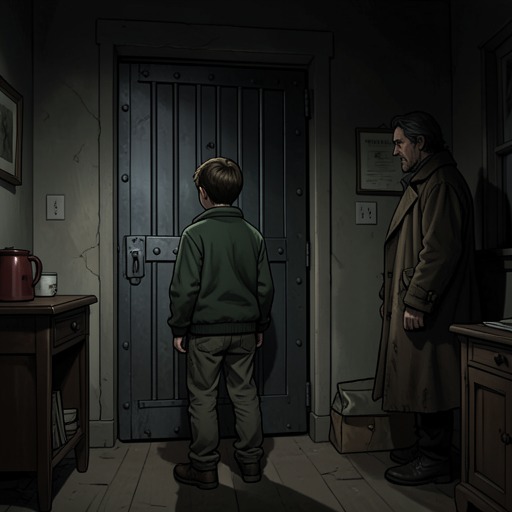
Pip’s discomfort shapes his preparations. He has been spending money on unnecessary decoration for his rooms and has hired a young servant, whom he outfits in elaborate clothes and assigns little useful work. He orders this boy, whom he calls the Avenger, to be waiting in the hall when Joe arrives. Herbert suggests breakfast dishes Joe might enjoy, and Pip appreciates Herbert’s thoughtfulness, although he suspects Herbert would have shown less enthusiasm if the visitor had been coming to see him.
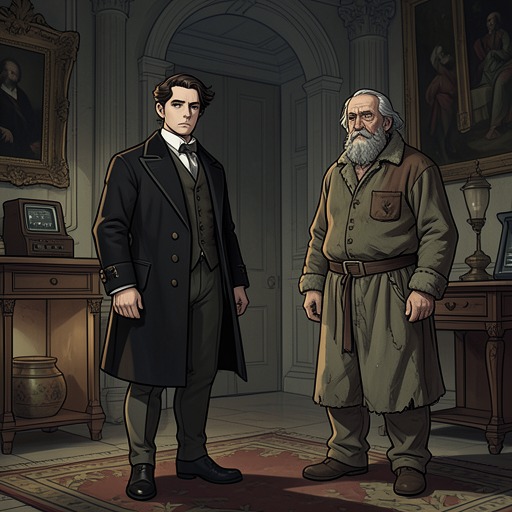
Pip comes into town the night before and prepares the sitting room and breakfast table for the morning. The preparations make the visit seem like a social test rather than a reunion. As the appointed time approaches, he wants to run away. Instead, he hears Joe’s slow, awkward ascent: Joe takes time to read the names on the other floors, traces Pip’s name by the door, and hesitates before knocking. Pip recognizes the visitor before he is announced. His attention to these small signs underscores how painfully he is measuring Joe against the manners and status he has begun to prize.
The Meeting and Estella’s Message
Joe and Pip greet one another with the familiar exchange of their names. In the conversation, however, Joe at first addresses Pip formally as “Sir.” He explains that the previous day, after cleaning himself, he had visited Miss Havisham. She asked whether he was in correspondence with Pip; Joe could confirm that he was, because Pip had written to him. She then asked Joe to tell Pip that Estella had come home and would be glad to see him.
The message changes the meaning of the visit. Pip’s face reddens as he hears it, and he realizes that, had he known Joe was bringing news of Estella, he would have encouraged him more warmly. Joe also tells him that Biddy had hesitated to write the message, but eventually urged Joe to go and tell Pip himself. The visit is therefore not merely a family call: Joe has taken the trouble to deliver news that matters deeply to Pip, despite the cold reception Pip has prepared for him.
Joe’s Farewell and Pip’s Recognition
When Pip asks whether Joe will return for dinner, Joe says he will not. Their eyes meet, and the formality falls away. Joe explains that people’s lives separate them, comparing their different trades and circumstances, but insists that the division should be accepted without turning affection into pride. He feels out of place in his clothes and away from the forge, kitchen, and marshes; he believes Pip would find less fault with him if he saw him at work in his familiar place. Joe wishes Pip well and blesses him as his dear old friend.
Pip recognizes the simple dignity in Joe’s words. Joe touches him gently on the forehead and leaves. Pip soon hurries after him into the neighboring streets, but Joe is gone. The gesture and the missed chance to continue the meeting sharpen the contrast between Joe’s tenderness and Pip’s embarrassment: the visitor has not reproached him, yet his graciousness makes Pip’s conduct newly visible to him.
Consequences and Significance
The visit begins Pip’s recognition of how completely his aspirations have altered his regard for home and its people. Earlier, he had become ashamed of the forge and kitchen and imagined Joe and his sister as common, unfit to be seen by Estella. Now, Joe’s restraint and generosity expose the moral cost of that social ambition. Pip’s own account presents the meeting not as evidence that Joe has changed, but as evidence that Pip has made himself cold to someone who remains faithful to him.
After Joe leaves, Pip decides that he must return to his hometown, but even then he invents reasons to stay at the Blue Boar rather than lodge with Joe. He later identifies these excuses as self-deception. The visit thus initiates a difficult recognition rather than an immediate repair: Pip can see the wrong in his behavior, but does not at once overcome it. Much later, after Pip falls ill and Joe cares for him, Pip understands anew the tact with which Joe and Biddy spare him embarrassment about his misfortunes. His eventual remorse and lasting correspondence with them confirm the importance of the bond that this London meeting briefly strained.